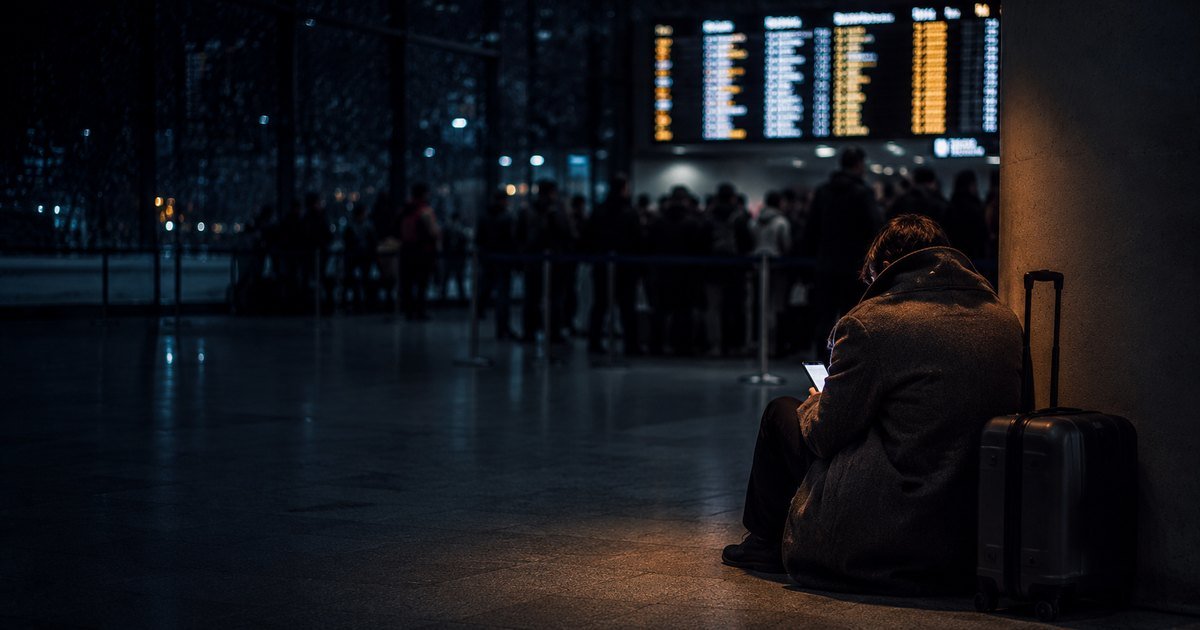
The uncomfortable premise
Start from the correct expectation, because it changes every decision that follows: when weather cancels your flight, the airline is required to rebook you on its next available flight, and that is all. No hotel. No meals. No compensation.
Some carriers hand out vouchers as goodwill, and some do so generously. But in the United States there is no legal obligation to accommodate you when the cause is outside the airline's control, and weather is the textbook example. Whatever you spend tonight, you are most likely spending yourself.
That single fact reframes the situation. You are not waiting to be looked after. You are competing for a finite supply of seats and rooms against everyone else on your aircraft — and the supply moves fast.
The first twenty minutes, in order
Do these in sequence. The order matters more than the speed.
Minute 0 — open the app, not your legs. Rebook in the airline app before you stand up. During major weather events carriers load fee-free change options automatically, and the app processes your request while the person ahead of you in line is still explaining their situation. The queue is the slowest available channel and it is the one everybody chooses.
Minute 2 — call while you walk. Start the phone call and let it hold in the background. If the app finds you a seat first, hang up. Foreign call centres for the same airline often answer faster than the domestic line during a US storm.
Minute 5 — decide if tonight is realistic. Look at the next departure the app is offering. If it is tomorrow morning, you need a room, and you need it now rather than after you finish being angry.
Minute 7 — book the room before the counter. Airport hotel inventory during a storm is consumed in under an hour. Book a refundable rate immediately; you can cancel it if a seat appears. The reverse order — counter first, hotel second — is how people end up paying four figures a night for whatever remains, or sleeping in the terminal.
Minute 15 — then join the queue. By now you have a seat, or a room, or both. Standing in line is what you do with your remaining leverage, not what you do first.
Stay airside or leave — the decision that traps people
This is the choice that goes wrong most often, and it is not obvious in the moment.
Stay airside if your rebooked flight is within a few hours, you have already cleared an international border, or re-entering security tomorrow morning would put you in a queue of every stranded passenger from tonight. A sleeping pod inside security solves the short overnight without exposure to that risk — [whether they are worth the cost](/blog/airport-sleeping-pods-worth-it-cost-comparison).
Leave the airport if the next departure is tomorrow and there is a hotel with a shuttle. A flat bed and a shower is a materially different arrival than nine hours in a plastic chair, and the price gap is smaller than people assume — [day rates and how to book them](/blog/how-to-book-airport-day-room-hotel-between-flights).
The trap: clearing immigration to reach a landside hotel in a country you were only transiting. That can require a visa you do not have, and it is not reversible at 1am. Check before you walk toward the exit, not after.
What actually gets you a seat
Four things that work, in rough order of effectiveness.
Take the connection through a different hub. Everyone rebooks on the same nonstop. A one-stop routing through an unaffected city is frequently open when the direct is sold out for two days.
Check nearby airports. Inventory sometimes opens at the secondary airport an hour away before it opens at the primary. If a train or a drive gets you there, that is often the fastest path home.
Ask for a confirmed seat tomorrow rather than standby today. Standby in a storm is a lottery against several hundred people with the same idea. A confirmed seat on a later flight is worth more than a maybe on an earlier one.
Be specific with the agent. Do not ask what is available — you will get the first thing the screen shows. Arrive with a flight number you already found in the app. Agents can confirm a specific request far faster than they can conduct a search while you both watch.
What to have on you in December
None of this is a packing list for its own sake. Each item maps to a specific failure mode of this exact night.
Your phone is the rebooking tool, the hotel booking tool and the boarding pass, and terminal outlets during a mass disruption are all occupied. A power bank is not a convenience here, it is the difference between having options and having none.
If your checked bag misses the connection you are on — and in a storm it frequently does — an AirTag tells you where it actually is while the airline system says "in transit."
And if the answer turns out to be a night in the terminal, earplugs and an eye mask are the difference between four hours of sleep and none. Terminal lights do not dim and the announcements do not stop.
Frequently Asked Questions
Does the airline have to pay for a hotel if snow cancels my flight?
In the United States, no. When the cause is weather, airlines are required to rebook you on their next available flight and nothing more — no hotel, no meals, no compensation. Some carriers offer vouchers as goodwill, but there is no obligation. Under EU261 the position differs: the duty of care including accommodation applies even when compensation does not.
Should I get in line or call after a cancellation?
Neither first. Rebook in the airline app before you leave your seat — during major weather events carriers load fee-free changes automatically. Start a phone call in parallel and let it hold. The physical queue is the slowest of the three channels.
How quickly do airport hotels sell out during a storm?
Often within an hour of a wave of cancellations. Book a refundable rate as soon as it looks like you are overnighting — you can cancel it free if a seat appears, and you avoid discovering at midnight that only premium rooms remain.
Is it better to stay in the terminal or find a hotel?
If your next flight is within a few hours, or you would have to re-clear security into tomorrow morning's queue, stay airside — a sleeping pod covers a short overnight. If you are overnighting properly, a hotel with a shuttle is worth it. Do not clear immigration to reach a hotel in a country you were only transiting without checking visa requirements first.
Travel Essentials We Recommend
As an Amazon Associate, we earn from qualifying purchases at no extra cost to you.

Anker PowerCore 10000 Portable Charger
Ultra-compact 10,000mAh power bank. Charge your phone 2-3 times — a lifesaver during long layovers when airport outlets are taken.

Apple AirTag 4-Pack
Track your luggage, backpack, and carry-on with precision. Find My network helps locate lost bags anywhere in the world. Essential for frequent flyers.
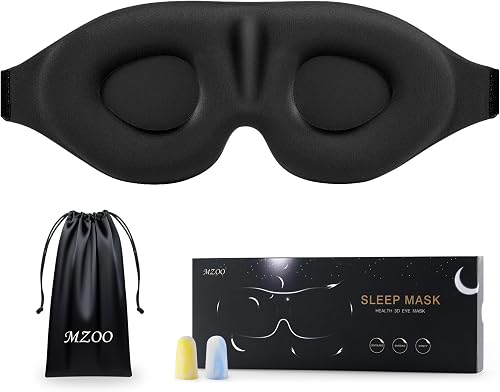
MZOO Sleep Eye Mask
3D contoured sleep mask with zero eye pressure. Complete light blocking for quality sleep on planes, in airport hotels, or during daytime rest.

Loop Quiet Ear Plugs for Noise Reduction
Reusable earplugs that reduce noise by 27dB. Perfect for sleeping on planes, focusing in noisy airport lounges, or blocking hotel hallway noise.
Ready to Book Your Stay?
Compare Boston airport hotel rates and book top-rated tours & transfers.
Or read our curated Boston airport hotel guide