
Bleisure stopped being a perk and became the default
The numbers moved fast: the global bleisure market passed $762 billion in 2025 and is projected past $2 trillion within the decade. More concretely for you — 38 percent of work trips now include a weekend stay, requests to extend trips are up at 41 percent of corporate travel programs, and roughly one in five companies now *actively encourages* extensions because a rested employee who likes traveling for work is cheaper than a burned-out one who refuses to.
Millennials made it normal; in 2026 it is simply how business travel works. The airlines noticed — American calls bleisure its fastest-growing segment. The only people still improvising are travelers who have not read their own company policy. Start there.
The expense split, done so cleanly nobody ever questions it
The universal principle across sane policies: the company pays what the business trip would have cost anyway; you pay the delta. In practice:
Flights: if the Sunday return costs the same or less than the Friday return (it usually does — weekend-stay fares are often *cheaper*), the flight stays fully on the company. Screenshot the fare comparison the day you book; that screenshot is your entire audit defense.
Hotel: company nights end when business ends. Book the personal nights as a *separate reservation* on your own card — same hotel if you like it, or downgrade/upgrade freely since it is your money. Two confirmations, zero ambiguity.
Everything else (meals, tours, the second museum): yours, on your card, never near the expense report.
The one email that prevents every problem: a two-line note to your manager before booking — "extending Thursday's trip through Sunday at my own cost; return fare is $40 cheaper, hotel split at checkout." Thirty seconds, and the audit trail writes itself.
The Friday rule (and other scheduling arbitrage)
The highest-leverage move in bleisure is not a booking trick — it is calendar placement. A meeting that ends Friday afternoon gives you Saturday and Sunday in-city with the company having already paid the expensive part: getting you there. Push for Thursday–Friday meetings over Monday–Tuesday ones and the weekend attaches itself.
Second-order tricks: red-eye home Sunday night beats Monday morning (you keep the full weekend and land in time to shower before standup). City pairs with Saturday-night-stay fare rules can make the extended itinerary *cheaper* than the pure business one — when that happens, some travelers split the savings with the travel desk and become legends. And if your partner joins, their flight is obviously theirs, but the hotel room costs the same for two — the cheapest couple's city break in existence rides on your Thursday meeting.
Making the weekend actually feel like a weekend
The failure mode of bleisure is spending Saturday half-working in a hotel lobby. Three rules keep the leisure real: move hotels if the business hotel is airport-adjacent — the $110 personal-night budget goes further in the old town than beside Terminal 2; book one anchor activity per day in advance (a food tour, a gallery, a day trip) so the weekend has a spine and the laptop stays shut; and set the out-of-office through Monday morning, because the last 10 percent of unplugging is where the recovery lives.
Our [city guides](/cities) cover the transit from every major airport into its city center, and each hub's guide lists weekend-worthy neighborhoods — the infrastructure for the leisure half of the trip is the same infrastructure we already map for the business half.
Frequently Asked Questions
Who pays for flights on a bleisure trip?
Standard practice: the company pays the airfare as long as extending does not increase it — and weekend-stay returns are often cheaper. Save a screenshot of the fare comparison from booking day as documentation.
Do I need my employer's permission for bleisure?
Check the travel policy first — one in five companies now explicitly encourages extensions. Even where policy is silent, a short written note to your manager before booking prevents every downstream expense and insurance question.
Does corporate travel insurance cover the personal days?
Usually not — corporate coverage typically ends when business concludes. For the personal segment, rely on your own travel insurance or credit-card coverage, and confirm health coverage abroad before the trip.
Travel Essentials We Recommend
As an Amazon Associate, we earn from qualifying purchases at no extra cost to you.

EPICKA Universal Travel Adapter (TA-105)
Covers 150+ countries with 4 USB-A + 1 USB-C PD ports. Essential for business travelers charging multiple devices at airport hotels and lounges.

Tile Mate Bluetooth Tracker (4-Pack)
Bluetooth trackers for luggage, keys, and bags. Works with both iOS and Android. Community find feature helps locate lost items worldwide.
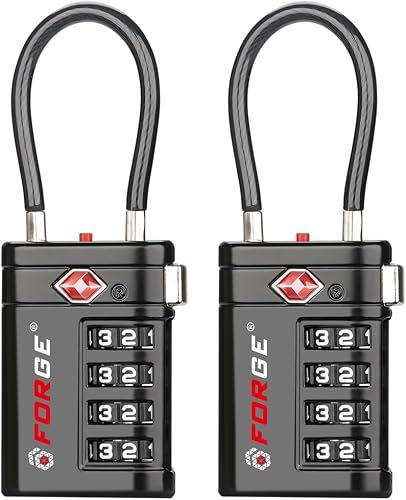
FORGE TSA Approved Luggage Locks (4-Pack)
TSA-approved combination locks for suitcases and bags. Secure your luggage while allowing TSA inspection without damage.

BAGAIL 6 Set Compression Packing Cubes
Compression zippers save up to 60% luggage space. Ideal for business travelers packing efficiently for short trips or carry-on-only travel.

Apple AirTag 4-Pack
Track your luggage, backpack, and carry-on with precision. Find My network helps locate lost bags anywhere in the world. Essential for frequent flyers.

Anker PowerCore 10000 Portable Charger
Ultra-compact 10,000mAh power bank. Charge your phone 2-3 times — a lifesaver during long layovers when airport outlets are taken.
Ready to Book Your Stay?
Find the best airport hotels in Bleisure with our curated selection.
View Bleisure Hotels