
Why 2026 is the year to go one-bag
Two things changed this year. First, price: nearly every major US airline raised checked-bag fees — a first bag now runs about $45, a second $55, and companies with heavy travel calendars are watching five figures a year leak into ancillary fees. Second, and more annoying, enforcement: automated bag sizers rolled out across dozens of airports, measuring carry-ons before boarding with no sympathetic gate agent to wave you through. United alone plans 80+ airports by year-end.
The response that actually works is not fighting the sizer — it is a bag that fits with room to spare, packed with a system. One 21-inch carry-on plus a personal item covers five business days if every item earns its place.
The 5-day formula: 5-4-3-2-1, business edition
The core list, tuned for meetings rather than beaches:
5 — underwear and socks (one per day; merino if you might stretch to day six).
4 — shirts: two business (non-iron), one smart-casual, one for travel days. Roll the casuals, fold the business shirts around a packing folder or magazine.
3 — bottoms: one suit trouser or tailored pant, one versatile chino, the jeans or joggers you wear on the plane.
2 — shoes maximum, and that is already generous: the leather pair you wear, plus flat-packing trainers if workouts are non-negotiable. Shoes are the one-bag killer; never pack a third.
1 — each of: blazer (wear it flying — it upgrades you at every counter), belt, packable rain layer, dopp kit, tech pouch.
The blazer-on-the-plane trick matters more than it sounds: it removes the bulkiest item from the bag and puts you in "please upgrade this person" clothing at check-in.
Compression is the whole game
A 40-liter carry-on fits a 5-day business wardrobe only if you remove the air. Compression packing cubes — the zip-around kind, not drawstring sacks — reliably reclaim 30–50 percent of soft-goods volume; shirts and knits compress dramatically, tailoring does not, so cube the casuals and fold the tailoring flat against the back panel.
The layout that survives automated sizers: tailoring flat against the spine, one large compression cube of casuals, shoes heel-to-toe along the hinge in shoe bags, dopp kit and tech pouch filling corners. Nothing in exterior pockets that bulges — the sizers measure the bag as it stands, bulges included.
Two items make the whole system work: a hard-shell case with honest dimensions (many "carry-on" cases run 1–2 cm over once wheels are counted — check the printed spec against your airline, not the marketing name), and the cubes themselves.
The personal item is your office
The under-seat bag carries everything you need in-flight and in-meeting so the overhead bag never opens in public: laptop, chargers and adapter, headphones, documents, medications, and one full change of underwear and shirt — your insurance policy against the rare gate-check.
Electronics discipline: one universal adapter that covers your whole itinerary, one 20W-class USB-C charger, two cables. The days of a cable spaghetti pouch are over; every duplicate is volume you paid $45 to avoid checking.
Final pre-flight check, in order: bag stands upright without bulges → weight under the airline's limit (some enforce 8–10 kg on carry-ons now) → liquids bag reachable → boarding pass shows the carry-on allowance you think you have. Basic-economy fares on several carriers now exclude the overhead bin entirely — the cheapest fare plus a forced gate-check costs more than the standard fare you skipped.
Frequently Asked Questions
What size carry-on avoids problems in 2026?
The safest universal footprint remains 55 x 35 x 20 cm (21.6 x 13.7 x 7.8 in) including wheels. US majors allow slightly larger (22 x 14 x 9 in), but automated sizers measure strictly — a bag honest at 55 cm passes everywhere.
How do I pack a suit in a carry-on?
Fold the jacket inside-out along its seams, lay it flat against the back panel, and wear it on the plane whenever possible. Trousers fold flat under the compression cubes. Non-iron fabrics and a hotel-shower steam remove remaining creases.
Are compression packing cubes worth it?
For one-bag travel, yes — zip-compression cubes reclaim 30–50% of volume on shirts, underwear and knitwear. They are the single highest-impact purchase for fitting five days into a 40-liter bag.
Travel Essentials We Recommend
As an Amazon Associate, we earn from qualifying purchases at no extra cost to you.

EPICKA Universal Travel Adapter (TA-105)
Covers 150+ countries with 4 USB-A + 1 USB-C PD ports. Essential for business travelers charging multiple devices at airport hotels and lounges.

Tile Mate Bluetooth Tracker (4-Pack)
Bluetooth trackers for luggage, keys, and bags. Works with both iOS and Android. Community find feature helps locate lost items worldwide.
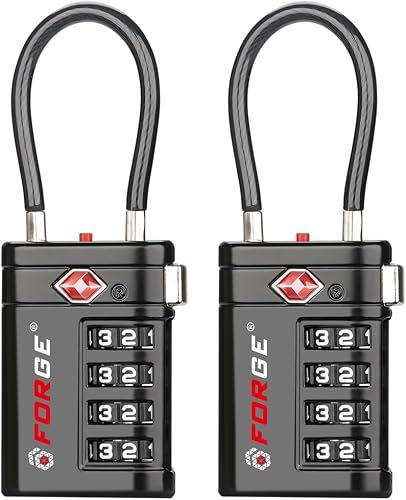
FORGE TSA Approved Luggage Locks (4-Pack)
TSA-approved combination locks for suitcases and bags. Secure your luggage while allowing TSA inspection without damage.

BAGAIL 6 Set Compression Packing Cubes
Compression zippers save up to 60% luggage space. Ideal for business travelers packing efficiently for short trips or carry-on-only travel.

Etekcity Digital Luggage Scale
Portable handheld suitcase weight scale. Avoid overweight baggage fees at check-in — a must-have for business travelers with tight schedules.
EPICKA Universal Travel Adapter (TA-105)
Covers 150+ countries with 4 USB-A + 1 USB-C PD ports. Essential for business travelers charging multiple devices at airport hotels and lounges.
Ready to Book Your Stay?
Find the best airport hotels in Packing with our curated selection.
View Packing Hotels